Opening the Bedford Catalogue: Stars

Stars are at once the most accessible and essential elements of understanding the night sky. Almost all of the more esoteric objects that astronomers observe and relish are intimately related to the apparently humble star. Galaxies, are composed of billions of individual stars while closer to home, relatively speaking, our own galaxy contains numerous clusters of stars. Some of these are straggly collections of a few dozen to a few hundred stars, the open clusters, while others are dense balls of many thousands of stars, the globular clusters. Vast clouds of  glowing gas, the nebulae, are related too: Some are   nursery regions where new stars are born, such as the wonderful great Orion nebula, while others are the remnants of huge explosions in which dying stars make their last stand.

In a sense then, stars are the central thesis of astronomy and it is fitting that our exploration of the Bedford Catalogue starts with them. There is another more prosaic reason however; stars are accessible to us all. The only optical device needed is a pair of eyes and even in the cities where the pernicious glow of sodium streetlights invades our sense of the night, the brighter stars are still visible.

The Bedford catalogue contains several hundred stars but many of these are double or triple stars, caught in a perpetual dance with one another by gravity. Most of these are best seen though a telescope but the catalogue also contains some of the brightest and most interesting stars and it is these that this post explores. Table 1 (click the link for a copy) lists the single stars of the Bedford catalogue, some of these are discussed in the original catalogue as doubles but are now known to be single with the apparent duplicity merely being an chance optical effect. This matters not a jot since these stars are without doubt the most celebrated ones in the sky.

Table 1: Bright stars in theBedford Catalogue

This list can be used in several ways; if you are already a seasoned astronomer then I’m sure like me you have overlooked ‘simple’ stars in favour of more celebrated fare and finding some of these using a simple star map is a good way to keep alive the joy of stargazing. This first selection from the Bedford catalogue is however aimed particularly at total beginners who perhaps have occasionally looked up and thought the sky looked nice but haven’t gone further. Many of the listed stars are suitable for observing without any optical aid. Look at the list and select those brighter than magnitude 4 (the lower the magnitude the brighter the star so here the magnitude number will be less than 4). These stars can be seen under most any light even moderately light polluted skies. If you enjoy a darker country sky then you will be able to see stars as faint as magnitude 6 so more of the list is accessible to you.

At the start, finding objects in the sky can seem complex because they are located using an different set of coordinates than terrestrial maps show and because many star names will not be on most maps. Help is at hand.. firstly I describe below how to find some of the brightest stars in the sky to get you started, secondly there are several entirely free software programs available that draw a map of the sky customised for your date and location and which allow you to search for a given star and finally both the Astronomy Now and BBC sky at night magazines website have  star map applications on them that you can look at any time to find the brightest stars (http://www.skyatnightmagazine.com/interactive-planetarium and http://www.astronomynow.com/sky_chart.shtml). In terms of the free software I like Cartes Du Ciel (http://www.ap-i.net/skychart/start) but there are several available. You can enter either the star name or SAO number in the search function in the Cartes Du Ciel program to get a customised map of your sky with the star highlighted.

Tonight though lets find one stand out star constellation together : Cassiopeia. This constellation has the advantage that it is circumpolar, jargon to mean that there is not a time of the year when it is below the horizon at night time from mid northern latitudes. This suits our purpose well because whenever you are reading this blog post you can find this constellation in your sky tonight. Cassiopeia forms the really recognisable ‘W’ shape in the sky and easily found with the help of one of the star charts named above. The next figure shows the W asterism as you might see it when looking up at the sky. The orientation and position changes with the seasons but the star charts above will help there.
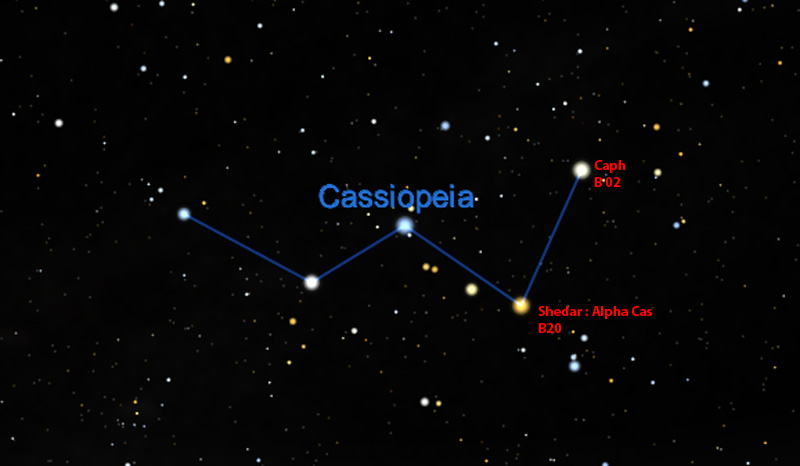
Once you’ve found this constellation, you will also have found your first couple of Bedford objects, the bright stars Alpha and Beta Cassiopeia. The opening paragraph of Smyth’s prose for the brightest of these Shedar, Bedford 20, exemplifies how wonderfully he writes and is as interesting today as it must have been for his original readers:

A Nautical Almanac star, with a companion (A magnitude 3, pale rose-tint ;  B magnitude 9,  smalt blue) . This object is in the right breast of Dhat-al-Kwrsa,  the Lady of the Throne ; and it also obtained the names of Lucida  Cassiopeia and Sehedir ; the last being probably a corruption of Al-sadr,  the breast, by the franxers of the Alphonsine.

I very much hope you have enjoyed this initial journey into this wonderful book and even more that you are encouraged to use Smyth’s book to explore the amazing night sky that he so poetically describes. I will return in future posts to explore the Bedford catalogue in more detail but in the meantime the starry heavens are calling and the sky is clear.

Posted in Bedford Catalogue, Smyth | Leave a comment

The Bedford Catalogue: A modern Companion (2)

bk_BedCatThis post is the second part of the introduction to the Bedford Catalogue. If you haven’t checked out the first part be sure to read that first.

The Bedford Catalogue, as discussed earlier, represents a perfect list for astronomers who have embraced the minimal astronomy ethos. There are however many problems to using the catalogue as it stands: The first of these, access to a copy of the catalogue has  been resolved by the republication of the second volume of Smyth’s ‘A cycle of celestial objects’ as the Bedford Catalogue by Willmann Bell (Lovi G. The Bedford Catalogue. 1986. Willmann Bell. Virginia, USA). This is a facsimile copy of the original text and is an essential purchase for anyone  exploring the Catalogue. I find the descriptions of individual objects were  written with a wonderful style that still resonates a century and a half later with the experience of sitting on a crisp winter evening with a small telescope under the stars.

Unfortunately the catalogue itself, of which the Lovi edition is a faithful replication, has shortcomings both in terms of the recorded positions of objects and the descriptions which were made nearly a century before the true nature of galaxies and nebulae were understood. Many of the double stars have significantly different separations and position angles too as expected given that they are in orbit around one another. Finally  analysis of stellar spectra was not available when the catalogue was published but is now critical to our understanding of different star types.

In order to make the catalogue useful I have started work on a companion volume to the Bedford catalogue and will contain the following:

  • Updated coordinates for all the objects
  • Extensive cross referencing of the objects with the other key catalogue data including the NGC and Messier Catalogues.
  • Details on where to find the objects in several key stellar atlas’s including the Millennium atlas and Uranometria 2000.
  • Detailed classification and description of each object including modern spectral and galaxy type data where appropriate.
  • Cross references to key works in the amateur literature
  • A Photograph of each non stellar object
  • Key references from the professional literature where relevant to allow further study of the objects.

I hope eventually to publish this as a hardback book but clearly this undertaking is a big one and I would like to make a contribution in the meantime by making the developing work available on the web in the meantime. I will thus be publishing the guides and support articles focussed on the Bedford Catalogue on this blog over the coming months as I write them and observe the objects myself. I do hope this will form a useful body of work and encourage use of this catalogue.

Posted in Bedford Catalogue, Introduction, Smyth, Uncategorized | Leave a comment

The Bedford Catalogue: A modern companion (1)

image

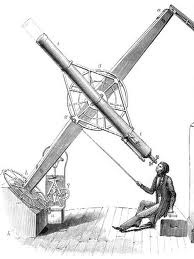
Admiral William H Smyth was a navy commander in the Napoleonic wars who retired from the navy in 1825. On his retirement he spent a considerable sum and purchased what was then the finest telescope in amateur hands in the UK, a six inch refractor that was installed in an observatory at his home in Bedford. Over the next decade he used this to compile a list of observations on many celestial objects such as galaxies, though of course they were not recognised as such at the time, and double stars.

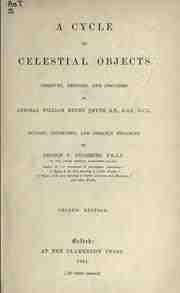
These observations formed the basis of a charming observing guide called  a cycle of celestial objects, originally in 3 volumes. The second volume of this has been published in facsimile by Willmann-Bell as the Bedford catalogue with a foreword by George Lovi. This makes Smyths’ observations available but unfortunately it is far from usable as a direct observing guide because of the inaccurate positions of many objects duer to precession and also recategorisation of many constellations. This aside the catalogue offers a lot of promise for amateur observations becasue:

1. Unlike the Messier list which was famously observed from Paris, this list was compiled of objects that are observable reasonably high in the sky from higher latitude areas such as England and more northern continential USA.

2. The list does not restrict itself to one type of object nor to purely deep sky objects but has a varied selection of stars, double stars, clusters, asterisms and ‘nebulae’ (including in fact galaxies and nebulae). This provides an interesting variety and, for me at least, has reminded me of how nice it is to observe objects that are not just ‘faint fuzzies’.

3. The objects were all observed using a small, by modern standards,   telescope. This makes the range of objects in the catalogue ideal for visual observation with common amateur telescopes today. A 8 inch sct scope or a small high quality refractor would provide good views of many of the objects while several, particularly the double stars, are optimally observed with a 4 inch refractor which is ideal for the sort of minimal astronomy outlined in Minimal star. In terms of imaging every object in the catalogue can relatively easily be imaged using a small refractor and light minimalist ccd I with short exposure times. The catalogue is thus easily accessible.

imageThe Bedford Catalogue therefore represents a really good observing program for both visual use or imaging with a minimalist setup but because of the changes in coordinates and object categorisation the catalogue is hard to use as it stands. I will be exploring my solution to this in part 2 of this post

Posted in Bedford Catalogue, Smyth | Leave a comment

An examined life

One poet, George Mackay Brown, said

‘For the islands I sing and a few friends, not to foster means nor be a midwife to ends’

I hope very much to make this blog exactly that; a personal exploration of the world and of the things that drive me. I hope you will find some of it useful and perhaps want to share some of the wonder inherent in the world that I hope you will sense here.

Some things you will find on my blog: An exploration of minimal astronomy, that is a new paradigm based on  specific minimised equipment but with a novel way of approaching the stars. You will also find some explorations of algal biology and of microscopy in general. I will cover some early attempts to emulate the old sketched style of science illustration using printmaking techniques.There will be some thoughts on how to struggle towards a more minimal lifestyle from someone who is only scratching the surface of that and finally there will be some thoughts on reading books, an activity that gets close to defining true value to me. There will be links to resources that people may find helpful if they are interested in any of these things.

What you won’t find are random ramblings on what it means to be alive, which I suspect will be very different for each of us, there will be no attempt to impose my world view on you nor to sell you anything except perhaps that the concept of an ‘examined life’ is not outdated but instead is more relevant today than ever.

Posted in Introduction | Tagged , , , | Leave a comment